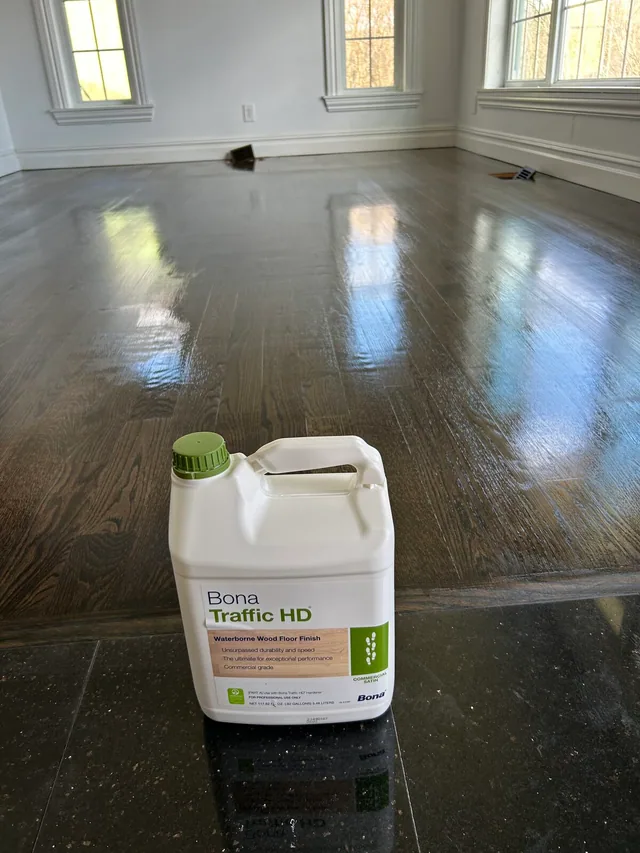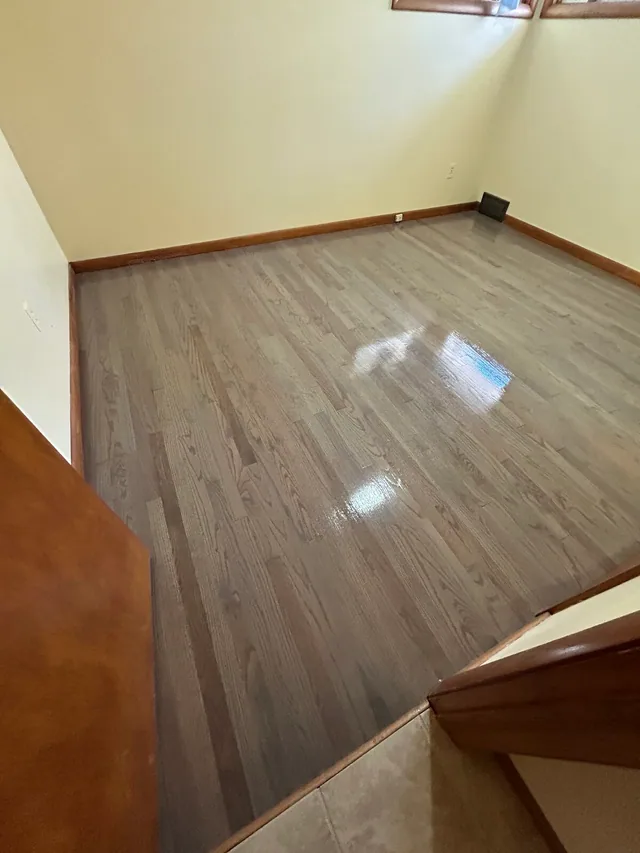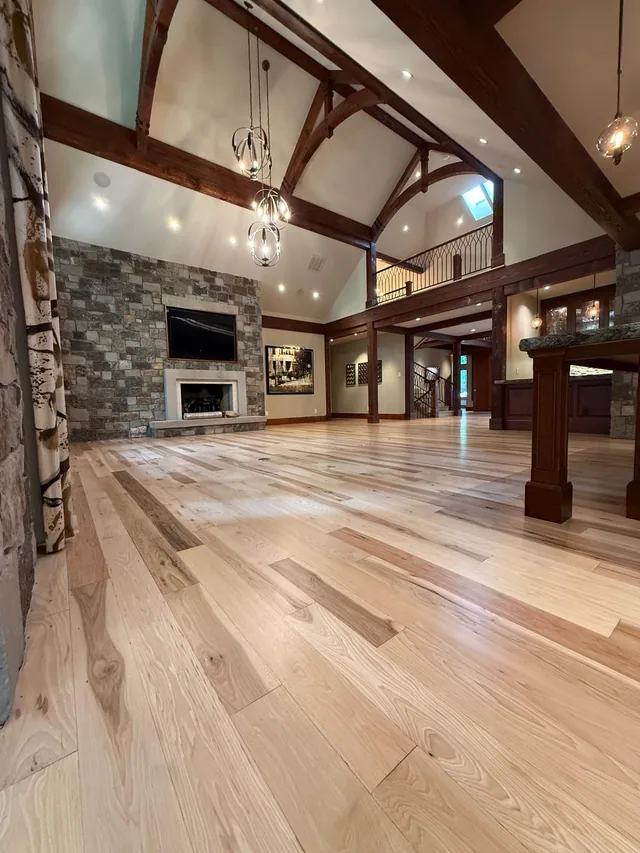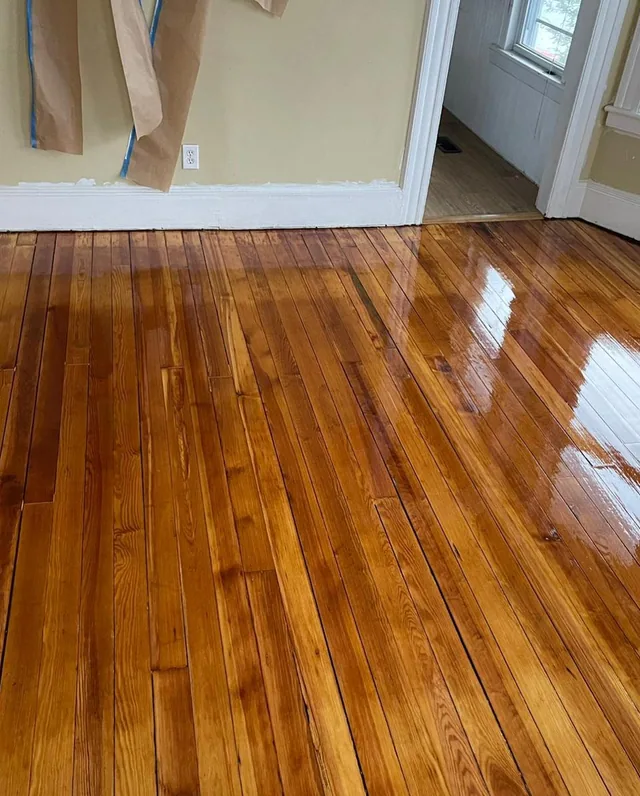
- Most worn hardwood only needs a full sand and refinish, not new boards.
- Replace when the wood itself is damaged: water, rot, deep cupping or boards sanded too thin.
- Engineered floors can be refinished only if the wood top layer is thick enough.
- Spot repairs and board weaving can save a floor that is damaged in just one area.
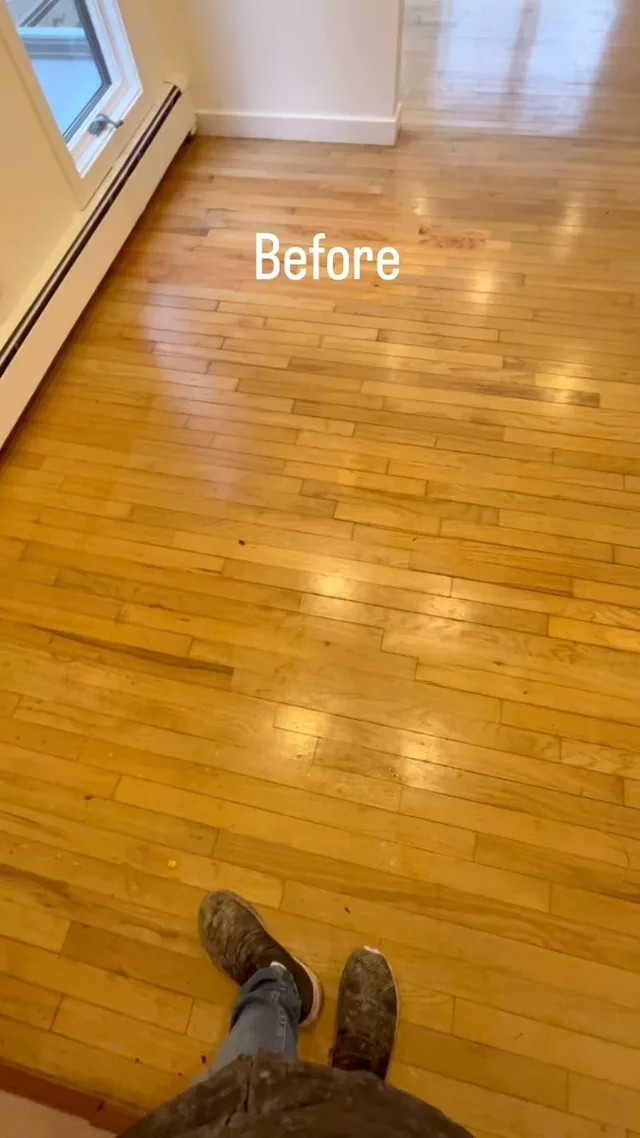
Gray traffic paths, scratches from the dog, a finish that turned orange over the years. When a hardwood floor starts to look tired, many homeowners assume it has to come out. In most homes we visit, it does not.
Solid hardwood was made to be sanded. A full refinish removes the old coating and the damaged top of the wood, and gives you a floor that looks new, in the color you choose, for a fraction of the cost and mess of a replacement.
Signs refinishing is enough
If the boards are flat, solid underfoot and firmly attached, the damage is almost always in the finish and the first fraction of an inch of wood. That is exactly what sanding removes.
- Surface scratches, scuffs and pet marks
- Faded, yellowed or uneven color
- Gray areas where the finish is worn through in walkways
- Small gaps that open in winter and close in summer
- You simply want a different stain color
This is the story in many older homes in New Haven, Hartford and West Hartford, where original oak is still under years of wear, or under carpet nobody has lifted in decades.
Signs it is time to replace
Replacing makes sense when the problem is the wood, not the finish:
- Water damage: boards that are black, soft, or badly cupped after a leak
- Too many past sandings: you can see the nails or the tongue of the boards
- Structural issues: a subfloor that moves or squeaks across the whole room
- A different use: a basement or rental where waterproof vinyl will simply perform better
What about engineered hardwood?
Engineered floors have a real wood top layer glued over a plywood core. Whether they can be sanded depends on how thick that top layer is. Thin wear layers may only take a light screen and recoat; thicker ones can often be fully refinished at least once. During the estimate we check the floor and tell you honestly what it can take.
The middle ground: repairs and board weaving
Sometimes only one area is damaged, like the spot in front of the sink or where a plant leaked for years. We can cut out those boards, weave new wood into the old, and then sand and finish the whole room so the repair disappears.
The same technique joins floors when a wall comes down between two rooms, which is common in renovations.
How a full refinish works
- Prep: we protect the house and repair any loose or damaged boards.
- Sanding: several passes with finer and finer grit, using our dustless sanding system.
- Color: natural, or one of our stain colors, tested on your own floor first.
- Finish: multiple coats of durable finish, with drying time between each.
Not sure which one you need?
That is what the free visit is for. We look at the floor, check the boards, and give you a clear recommendation and price for refinishing, new hardwood, or a mix of both.
Frequently asked questions
How many times can hardwood be refinished?
Solid hardwood can usually be sanded and refinished several times over its life. How many depends on the thickness of wood left above the tongue, which we check during the estimate.
Can you refinish only one room?
Yes. We can refinish a single room, and we can blend repairs so they match the rest of the floor.
Is refinishing cheaper than replacing?
In most cases, yes. Refinishing reuses the wood you already have, so there is no material to buy and no old floor to remove.

Wood Floor Service LLC installs and refinishes hardwood, vinyl and laminate floors across Connecticut, with more than 10 years of experience. Meet the team behind this guide.